

Hugging Face
Hugging Face hosts models, datasets, libraries and AI demos, including Arabic resources and free and paid services. Licences, performance and costs depend on the resource and how it is run.

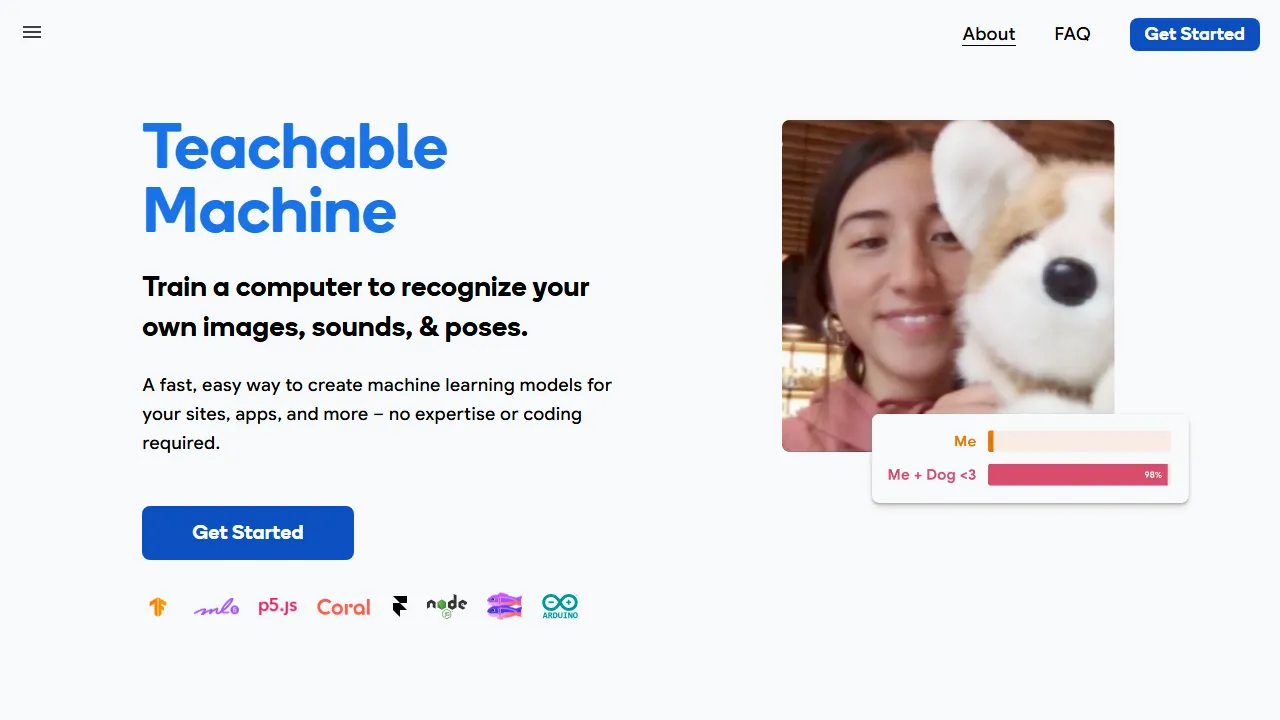
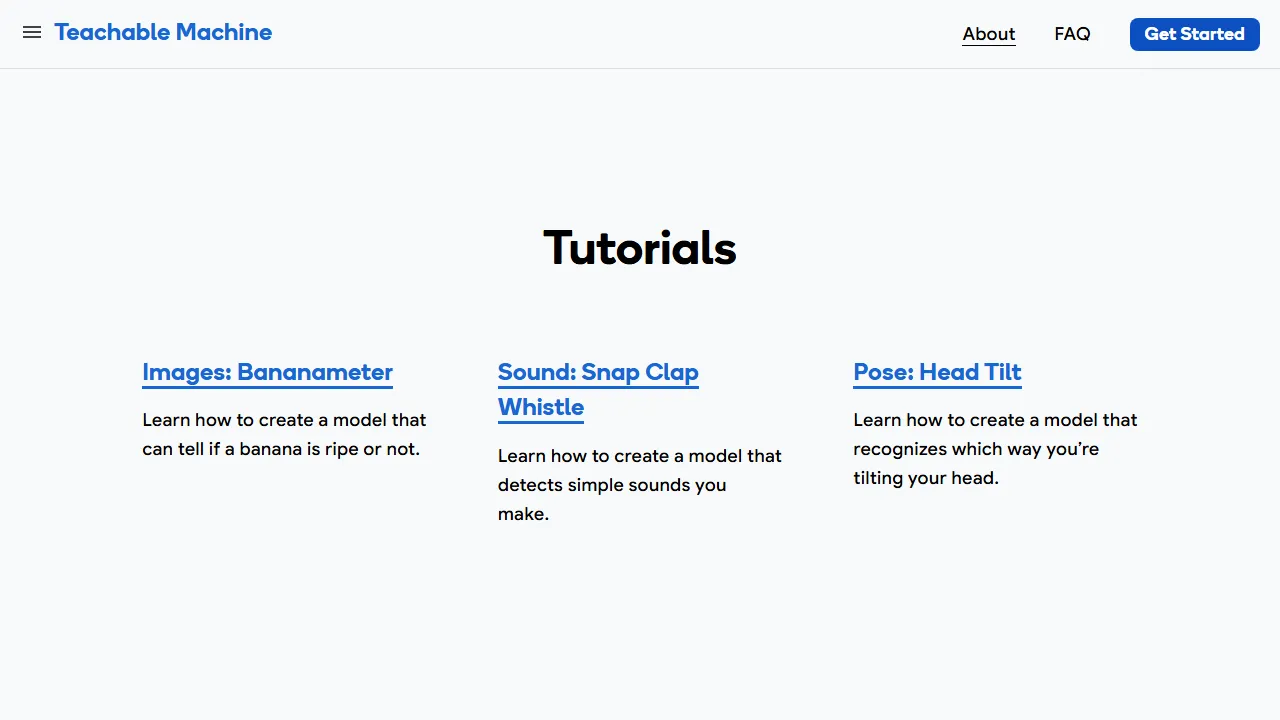
Teachable Machine is a Google Creative Lab experiment for training image, sound and pose classifiers in the browser without writing training code. It suits learning and prototypes; real deployment needs separate evaluation.
Teachable Machine is a Google Creative Lab experiment for building classifiers from examples, not an enterprise platform for every machine-learning task. Students, educators and makers can explore how data affects results or prototype an interactive idea.
Group examples into classes, train an image, short-sound or body-pose classifier, then test and export it. Models work with TensorFlow.js and other export routes are offered. Avoiding training code does not mean deploying into an application or device needs no development.
Collect varied examples for each class and keep new examples for evaluation. Change lighting, background, microphone or environment to discover whether the model learned the intended signal or incidental cues. A high confidence score is not proof of correctness. Check data bias before using a prototype beyond an experiment.
The free web experiment supports learning and prototypes; hardware and hosting costs for your own project remain separate. The official FAQ says training runs in the browser tab and samples are not sent to servers unless you choose Google Drive project saving. Publishing and hosting differ from local training, so examine export choices before sharing a model or link. Enterprise maintenance or suitability for sensitive decisions is not guaranteed.
Hugging Face hosts models, datasets, libraries and AI demos, including Arabic resources and free and paid services. Licences, performance and costs depend on the resource and how it is run.

Amazon SageMaker brings together data, analytics and AI capabilities, including SageMaker AI for building, training and deploying models. It serves technical teams and requires resource, permission and cost management. A unified interface does not make every service or model free or ready without configuration.